Showing posts with label Xbox. Show all posts

Wednesday, June 5, 2013

Why Sony has an Edge Going Into the Next Console Cycle


Sony burst out of the gate in February with the intention of winning back gamers and clearing the smear the PS3 left on their name. They know they cannot make the same mistakes as last time with exclusives, a complicated console to develop for, and a price point that turns away consumers. Mark Cerny made a point at the PS4 reveal that Sony is moving forward in the right direction. People have voiced their complaints about his speech being long winded with no information they cared about.

But Cerny did one thing that Microsoft failed to do in their entire presentation. He made me feel like they cared. He made me feel like they understood the gamer. He didn't feel like a businessman coming out trying to sell me a product. Instead he came out, acknowledged the faults of the previous console, and the ways they went about correcting on them. The importance of developers were a major point both with the console structure itself, and later with indie devs and Jonathan Blow. Throughout the entire presentation, Sony focused on the gamer and brought out people who created the games and the console itself. Microsoft went the other route by not focusing on games and bringing out people who nobody could connect with.


Sony received some major help after the Microsoft press conference due to the lack of cohesive answers given by Microsoft employees regarding various console topics. Used games, always-online, fees, Kinect requirement; you name it, nobody seemed to have the same response. Microsoft, which should be professionals when it comes to announcements and what to hold off on, came out like a hydra with the numerous heads spouting conflicting information. And while Sony may be doing similar things, their responses were vague enough to get the attention off of them. But most importantly, everyone who spoke about it, spoke in a unified informed voice. Anyone who sees Microsoft flopping around like a fish out of water with their responses should be concerned about how things are working behind the scenes. Their Xbox One reveal was pushed back several times from their rumored date, and they still came out stumbling. It's hard enough to convince people to purchase this console based on the information coming out, and it's even harder when the company behind it appears to have no idea of what is going on.

Microsoft also moved away from what made the Xbox and Xbox 360 successful. In the later part of the 360 lifetime, games became less of a priority and the media aspects grew in relevance. The Xbox One follows the 360 by sticking with media as the first and foremost thing to talk about...but it still plays games! Their way of showing this is by having two first party games, one of which is pretty annual in Forza 5. Then they bring out the big guns in other yearly games in sports and Call of Duty. And among the games shown, no actual gameplay.


So a week before E3, the biggest E3 EVER one could argue, below is a list of exclusive games for each console that has been revealed (not counting PC, previous-gen versions, timed exclusives or just hasn't been announced for the other console). The list does not include games we know exist, but don't know the name for:


PS4:
1. Infamous: Second Son
2. Killzone: Shadow Fall
3. Knack
4. Drive Club

5. War Thunder
6. Primal Carnage: Genesis
7. Deep Down
8. The Witness
9. Final Fantasy
10. Blacklight Retribution
11. Diablo 3
12. DC Universe Online *free*
13. Planetside 2 *free*
14. Warframe *free*


Xbox One:
1. Forza Motorsport 5
2. Quantum Break
3. Ryse
4. Fantasia: Music Evolved


From the sheer number of announced exclusives, PS4 is destroying Microsoft. Don't fret, Microsoft has games up their sleeve for E3. But the same can be said for Sony. So both lists can still grow quite a bit not only next week, but before and after as well.


E3 will allow for Sony to open up a little more about their system. While the social media functions are important, that can be quickly shown at the end of a new game to demonstrate how it works. Introducing how Gaikai will be implemented could be one of the biggest announcements depending on what it embodies. And if they can prove that remote play works between the Vita and PS4, that could not only sell PS4's, but Vita's as well.

But one of the biggest questions is...how much? We know the consoles will release around the same time (October-Black Friday), but the cost is the big headscratcher. Sony isn't planning on making the same mistake twice with pricing as they already revealed they won't be taking the same hit they did with the PS3. Microsoft on the other hand is also incorporating an updated Kinect. And if the current Kinect is at $100, then what would the current Kinect be worth. Add the system on top of that, and Xbox may very well have a higher priced console. Figure in a subscription which could cost more this generation. Unlikely you say? It would make sense if they are adding in 300,00 more servers with additional content for users than what is currently provided on the 360. And if that is true, why would the 360 users be paying the same amount although what is provided to them is different?

Microsoft has wavered since it's announcement and Sony is riding high from a fairly positive reveal and Microsoft's mistakes. E3 will either make or break Microsoft, and Sony should be stable depending on what Microsoft has to show. But if Sony decides to put their foot down, Microsoft may not have a chance. Microsoft has to wow everyone and Sony just has to continue what they are doing. All expectations could flip come E3, but from the looks of it, it's looking pretty promising from Sony. But there's always Wonderbook...

Wednesday, May 22, 2013

Why the Xbox One Will Have a Harder Battle Than the Xbox 360


I think it's safe to say that the Xbox 360 proved successful for Microsoft. They are within 3 million sales of breaking 80 million units worldwide since it's initial launch in November of 2005. While it has had it's own hiccups with hard drive issues and the infamous Red Ring of Death, it still went on to impress a lot of gamers and is still their system of choice.

So similar to Sony coming into the PS3 era, Microsoft should feel pretty confident to be able to capitalize on the accomplishment that was the 360. But much like Sony, Microsoft may have gotten a little ahead of themselves and came out with their chests puffed out feeling on top of the world. But after the Xbox One announcement yesterday and the ensuing devastation of gaming press picking apart the news they glossed over at the event, Microsoft appears to be backpedaling a bit and starting to realize they may not be in the position they once were. They are no longer on the cruise ship 360, they are pulling away from it in the rowboat that is Xbox One.


Microsoft came out of the gates with an advantage. They had an appealing online structure that no other system had and, with the runaway series of Halo, many fans who would support the 360 with it's release. And while the original Xbox was only 4 years old, the 360 was the beginning of the next generation of consoles especially with the Wii and PS3 not far behind. So of course upon it's release, it had no next-generation consoles to spar with making it the newest and best console to have as a gamer. And as most gamers know, it's hard to resist that urge for something new.

So as the first system out, they already had an advantage over the Wii and PS3. Of course, we all know what happened once the Wii was released and how it won over all of the mothers who watch Oprah and the Nintendo fans who were hoping to finally see an HD Mario and Zelda. And while the latter didn't get what they want, the average non-gamer consumer received the product they wanted, albeit, one that didn't stay in their frame of mind outside of Wii Sports and various exercise games.

But the PS3 took a different route. Instead of selling gangbusters, they decided to piss off the fan base with an overpriced system that only the hardcorest of hardcore fans would purchase. Blu-Ray wasn't expected to turn out like it did (HD-DVD all the way, amirite?!), PS2 was still running rampant in sales,  and the 360 didn't look worse graphics wise and cost less. PS3 was on the ropes, and the 360/Wii were throwing the jabs.


All it took now for Microsoft was to strengthen their relationships with third party developers. This was clearly evident with the deluge of exclusives the system had their first few years. Games like Blue Dragon and Infinite Undiscovery, which would feel natural on the PS3, were instead 360 exclusives. Games that came out first on the 360 (later ported to other places) such as Mass Effect and Bioshock helped change the gaming industry for the better. Then Microsoft rubbed in their own exclusives with Gears of War, Halo 3, Crackdown and Forza 2. Microsoft was on the ball with exclusive games that other systems would either not receive or receive much later.

But it wasn't just the third parties that jumped into the ring with Microsoft. The 360 started something this generation with it's service allowing indie developers to really strive. While Geometry Wars impressed people immediately, the Live Arcade really hit it's stride around the time of Braid and really showed gamers what these smaller developers could do. It proved that the Live Arcade didn't need to be classic games brought back, and that the games were on par with retail games in terms of quality.

Although the PS3 started to hit it's stride, Microsoft still excelled when it came to ease of development. Due to the difficult PS3 hardware, most devs would work on the 360 version and then port over to the PS3. Developers have come out and said the trouble of developing for the PS3 created more negatives than positives in their mind, which resulted in poorer versions on the PS3 in terms of frame rate, graphics, textures, etc.

It would also be foolish to ignore how big Call of Duty really sparked the "Bro"-mentality of gamers. While the PS3 has these gamers as well, they were shadowed in sheer number of those on the 360. For example, within the first few months of Call of Duty: Modern Warfare's release, the PS3 had only sold less than a 1/3 of what the 360 had sold in software. To many gamers, the Xbox 360 was a Call of Duty machine and that hasn't changed whatsoever.


But somewhere along the way, the focus of the Xbox 360 started to shift from games to media. The interface of the Xbox changed to incorporate more ads and more difficulty in finding games. The Indie Games alone proved a challenge to find. The focus on apps such as Netflix became more important over the exclusive games they once released as those began to dwindle to Live Arcade and first party devs. But like some of the older exclusive games, even the once Live Arcade exclusives started to trickle to other platforms including Limbo and Castle Crashers.

So instead of being game-specific exclusives, they went a slightly different route by looking at timed-exclusivity. This is most evident with Call of Duty where DLC is released a month in advance for the Xbox 360, but other games have done it as well including Bethesda's Skyrim. This was to encourage sales for software on the 360 so players who had the game would be able to access the DLC at an earlier stage than those on the PS3.


As this generation comes to a close and the next console war is about to reignite, it's easy to see where the advantages the Xbox 360 had over the PS3 will not play out in the same way for the next systems. The Xbox One will not be released a year before the PS4 and instead will have to go toe-to-toe with it this holiday season. The people who want a new generation console will not have only one to choose from, they will have two.

Chief financial officer Masaru Kato has stated that the PS4 will not be a financial burden for Sony the way that the PS3 was. The PS3 had it's own special hardware that was costly for Sony and this generation they are not making the same mistake. Using third party for production and hardware is allowing the system to be created at a cheaper price. Meaning, the price point between the Xbox One and PS4 should be much closer than the large discrepancy that the PS3's price point provided. And with these hardware specs being pretty similar, the difficulties of developing for the PS3 are now moot and the Xbox won't be able to tout that over Sony any longer.

To the games and exclusives, Sony definitely has the advantage in terms of sheer studios. However, Microsoft clearly doesn't mind throwing money at their problems as evident in the Xbox One reveal and the special partnership with EA. While Sony hasn't revealed exact details of how many exclusives they have (although they said all of their studios are working on PS4 games), Microsoft is bringing 15 to the table within the first year and 8 of them are new IP's. As of right now, the known exclusives (not counting PC) for each system are:

PS4: Infamous: Second Son, Killzone: Shadow Fall, Knack, Drive Club, Primal Carnage Genesis, War Thunder, The Witness (timed exclusive)

Xbox One: Ryse, Forza 5, Quantum Break

More will clearly be announced in a few weeks at E3.


Lastly, there has been quite a bit of indie developers voicing their opinion about the PS4 and Xbox One. Jonathan Blow surprised everyone coming out during the PS4 conference and letting indie developers know that this is the console they should go with. Days after the conference, he was brought onto the Playstation Blogcast where he helped explain why that is. While he did mention how it's easier to develop than the PS3, he didn't hold back when it came to the difficulties of developing for Microsoft and the hoops he had to jump through. This was only backed further when he mentioned that he had still not seen a dev kit for the new Microsoft console, but Sony was more than eager to get one out to everyone who had asked.


This seems to follow in line with how Microsoft has been treating indie devs with their procedures in the past few years. Everything became clear when Fez creator Phil Fish voiced his concerns about spending thousands of dollars per patch to fix problems with the game. Many were not happy that Fish wouldn't fix the issues, but it brought to light an even bigger problem and that was how costly it was to do so with Microsoft. Since then, Microsoft has not been able to avoid that criticism and have done their best to dodge any questions about it. Phil Fish had his own comments about the Xbox One reveal on Twitter...but you should look at that on your spare time...preferably not at work.


While indies were overlooked at the Xbox One conference, the feathers were really ruffled in post-conference comments from people throughout the Microsoft community. Nobody seems to know exactly what's going on with conflicting information coming out about used game fees, how used games work, the importance of always being connected to the Internet, how the Live TV will work with the various Cable Providers out there, and many more I'm forgetting. This inability by the people at Microsoft to have one voice with these answers, and their way of saying information is wrong without really clearing it all up, is making Microsoft look bad. The conference itself felt lifeless and a string of promo videos and the voice of gamers can be heard in disgust as little was shown on the gaming side. And what was shown, were trailers with no actual gameplay.

Microsoft seems poised to shoot themselves in the foot this gen, because so far, they have done very little to provide themselves good press. The conference held yesterday should have been the time to clear up the negativity around their console and rumors and instead all it did was create more concern about the Xbox One. Microsoft will not have the fortune of Sony blowing sales this time around, and they won't have a year head start on sales. If they do not do something at E3 (or before then) to clear up the confusion and worries of the people looking for a next-generation console this year, then they are doomed to lose this console war before it has begun.

Thursday, May 2, 2013

Microsoft and the Xbox Rumors


On May 21st, Microsoft will unveil the new Xbox to the world and have gamers talking leading into E3 a few weeks later. And while there's no guarantee of what will be shown or announced, I'm sure it'll be similar to what Sony's PS4 conference had with spec information and some games, I think there will be some focus on the non-gaming aspect the new system will have along with seeing the box (since that's so important to Mr. Microsoft Major Nelson apparently). Not to mention, the name should be announced so people can stop guessing whether it's going to be Xbox 362, The Xbox, Xbox Infinity, etc.

So in this post, I wanted to highlight some rumors that I find either interesting or need to be discussed with a somewhat open mind without jumping to automatic conclusions.


1. Two Models: To Game, or Not to Game


While it's a given that the next Xbox will have both gaming and non-gaming capabilities, rumor is that Xbox will have two different models. One of those models will not include a disc drive as it will be more of a Roku or Apple TV type device that is used as a media center device to stream movies and shows. One rumor is from someone claiming to have worked on this set-top box saying they will have functionality allowing an individual to search using gestures and voice-recognition, which makes it sound like Kinect could still be integrated into this sku.

Microsoft has taken strides to become more and more like Apple as the gaming side of Xbox has dwindled but the functionality with other apps and programs has become increasingly important. Having a box that rivals Apple TV with some new bells and whistles could be another way in doing so while still using similar hardware already being put to use in the gaming market of Microsoft. Whether or not Microsoft decides to go this route will surely be seen later this month, but there's no reason to believe they wouldn't as they seem to have a healthy dose of products to put on such a device.


2. Backwards Compatibility Add-On


The past few generations have been spoiled with backwards compatibility. Back in my day, we wouldn't expect a new console to play old games unless they were re-released on the new console. But thanks to the Internet and vocal minorities becoming vocal majorities, it has become commonplace for people to clamor for backwards compatibility.

Not to say it's not logical. It makes sense as to why people wouldn't want to keep 16 different systems laying around the TV and switching them out to play a few games if you could keep just one that played all of them. And with technology improving with each new iteration, eventually one of these would be able to play old games with little effort, right? In the case of the PS3 it's understandable why the PS4 won't be able to due to completely different hardware, but why not everything else? Cost? Console design? Hell, I don't know. If I could answer this completely, I sure as hell wouldn't be typing up this blog.

While rumors say the new Xbox won't be able to play 360 games, there are talks of an add-on that could be hooked to the new box to do so. Either way, Microsoft might find a way to convince people to get rid of the old system, but keep the games and upgrade to new hardware. While this would be pretty great, let's not forget how the current gen backwards compatibility fared as only some games would work and others wouldn't. Hopefully, if they create an add-on device, they would work out the kinks to allow all current-gen games play, and not only a selection of them.


3. Two Year Contract


Microsoft announced a model last year for a $99 Xbox that would then have a 2-year contract for customers to pay. Easy money up front, long term commitment. And while the total payment would come out to more than what you would just forking it all out at once, it may have been a positive experience for them. They haven't released numbers specifically for that model, but it could have been the beginning of a good idea for the next gen console.

Some look at the overall price and realize that you will pay more in the long run, but most customers won't care. It's easy to pay monthly than one lump sum at the beginning, and that's enticing to many people. Sony and Nintendo would be smart to have a similar option, but nothing has been noted yet. Microsoft looks poised (and is rumored) to release this option with great success, as it will look like a great deal sitting next to consoles priced $399 and up.

On the other hand, consoles make for great presents for birthdays and holidays. I'm not sure how eager some people are to buy "the gift that keeps on giving.....you bills each month". But if Microsoft releases a brand new console with this type of option, it will be a winning formula for them.


4. Always-On


Yep. That's the error message Sim City players received due to the always online setup with the game. If Microsoft decides to go this route, you may be familiar with similar error messages.

But Microsoft wouldn't really do that now, would they? I think people give them a little too much credit. Microsoft knows people will pay for their service even if they aren't entirely sure what they paying for. If I had to guess, it would be more ads and more content I would never use. Yet they get rid of 1 vs 100 which was amazing but is the one device I have to pay extra on to watch Netflix. Something is a little screwy there. But how many people willingly fork out $40-$50 a year on a service for party chat and "better servers". Heads up folks, you aren't paying for "better servers", you are paying for "Internet capability" which just happens to have "better servers". Considering how cluttered the dashboard has become and slow everything seems to have gotten, clearly the money being put on Live isn't going where it should be. But people still pay, and that's how Microsoft knows they have customers hook-line-and sinker.

Microsoft would be foolish to have the next console be always-on, especially after the disaster that was Sim City's launch. Factor in every Christmas where the influx of new users makes the system crash (or the release of a new Halo game) or just cases where it doesn't work where they don't really explain why; having the system be always-on would be the biggest slap in the face to their customers, not to mention the ones who don't have Internet. The negatives far outweigh the positives, and there is no benefit that anyone can muster except Microsoft...because it benefits them.

As much as I want to dismiss this rumor, there have been a lot of rumors about this. Adam Orth helped fan the flames with his twitter ramblings, docs have been released saying it's always online, Dev kit screenshots show always-online capability...there's just a lot coming out to simply dismiss this. If Microsoft thinks they can do this and do it well, best of luck to them. But they are playing with fire, and as Frankenstein knows, you don't want to piss off a mob of people who have fire.


5. Used Games


If the always-on concern doesn't frighten you, then perhaps the talk of no more used games does. I'm on the fence when it comes to used games. I love having the ability to sell my games to purchase a new one, but at the same time, I understand publishers need those purchases so stores will buy more games from them to sell.

But both PS4 and the Durango have had rumors about them not playing used games. Jack Tretton for Sony said used games will be playable on the PS4, and while it's not as definitive as that, Gamestop seems enthusiastic about the new Microsoft console. And if Gamestop is happy about it, then my guess is that it will play used games.

Cut and dry, right? Not quite. Not long ago, something was added into some games that caused a collective groan among gamers. Online passes. Once they were redeemed, other gamers wouldn't be able to access the online portions of the game if they purchased it used. Some would luck out as the passes weren't redeemed, but most gamers would have to fork out an additional $10 to use any online aspects of the game.

Now what if both Sony and Microsoft were being honest in that the consoles can play used games? The caveat being: You buy it used, you have to pay a little extra to be able to play it. Not an online pass, just a game pass in general. As criminal as that may sound, nobody can really complain in the long run. Gamers who had a problem with no used games would still have the ability to sell them to Gamestop, Amazon, wherever. Gamestop would still have sales coming in from used games. Publishers would receive a little something for used games whereas in the past they didn't. Everyone seems to win a little bit, even if it's not a perfect scenario for everyone. So while I think the rumor of no used games is bogus, I think there could be a possibility of some information being held back until the last possible moment.


In just a few short weeks, we may have an answer to a few of these rumors. Some answers may hide crucial information to see the full picture, but some rumors will definitely be put to rest. Microsoft will have some momentum going into E3, and the gaming world will be in full frenzy until the release of next generation of consoles.

Thursday, February 14, 2013

What the Next-Gen Consoles Need to Succeed

It seems the past few years we have expected the consoles to release at any time. Well, it seems that time has come. With more and more rumors coming to light and Sony having an announcement on 2/20/13 discussing the future of Playstation, the console war looks to spark up again between the next generation systems.


However, there won't be such a discrepancy between the systems as there once was. According to rumors, Sony has ditched the cell processors that were problematic for developers and are going to be on the same level with Microsoft in terms of development. They both may have the potential to collapse the used game market (unlikely, but still being talked about), both will try to have a focus on being a media box instead of solely being a game system, and integrating motion control into the system (or controller) this time is a possibility.

So what do the systems need to really differentiate themselves between the competitors? Wii U has hardware that isn't on the same level, and they are clearly going with their game pad, 1st party exclusives, and social aspect of the Wii U to be what captivates gamers. Despite those big three things, the sales for the Wii U has seemingly been disappointing in the eyes of most people, but shouldn't be counted out considering it hasn't been out for very long. It takes a while for a system to really get steam and have the potential unlocked, and that may just be the case for the Wii U. But for Microsoft and Sony to succeed next generation, they have more to prove.


1. Price


Sony knows better than anyone how much the price of a system can influence sales. The PS3 suffered heavily due to it's intimidating price point, and a more recent example can be the Vita. Not to say that each system isn't worth that amount, but for a consumer, it's not easy to fork out the amount that the PS3 and Vita asked for considering the competitor system/handheld prices.

Fortunately for Sony, they are making a system that will have cheaper specs and Blu-ray is no longer the price cow it used to be. But the magic number of $399 floats around as being the absolute most someone might spend on a new system. $450 with a game or an extra controller, but $399 for a basic system what people seem to clamor for as the most a system will cost. Hopefully this isn't completely outrageous, but I'm not a developer and I have no idea what it takes to make a profitable and affordable system. Which at first, probably won't be.


2. Exclusive Games


I think it's hard to say that exclusive games don't matter. Part of the reason Nintendo is successful is because of the love of their franchises. Originally that wasn't the case as many developers outside of 1st party could succeed on older systems such as the SNES, but recently Nintendo hasn't been as loving to outside devs. They seem to be trying to change that with the Wii U, but it doesn't change the fact that their Mario, Zelda, Smash Bros., Mario Kart, etc are what help make that system successful.

So both Microsoft and Sony need to focus on exclusive games as well. Microsoft needs to continue pumping out the Indie games, even if they are usually timed exclusives, such as Fez, Limbo, Trials, Super Meat Boy, etc. They have some big hitters when it comes to 1st party games in Gears of War, Halo, and Forza, and it's almost a guarantee those will continue to come. Sony needs the same and has been improving with their PSN games such as Journey and the Unfinished Swan. But they have also let off a lot of their studios and that doesn't bode particularly well for the future of exclusives. But they can always fall back on Resistance, Uncharted, Killzone, and Infamous. Neither company have the exclusives that even register on the same scale of Nintendo, but they need to promote the games they have and the other company doesn't.


3. Marketing


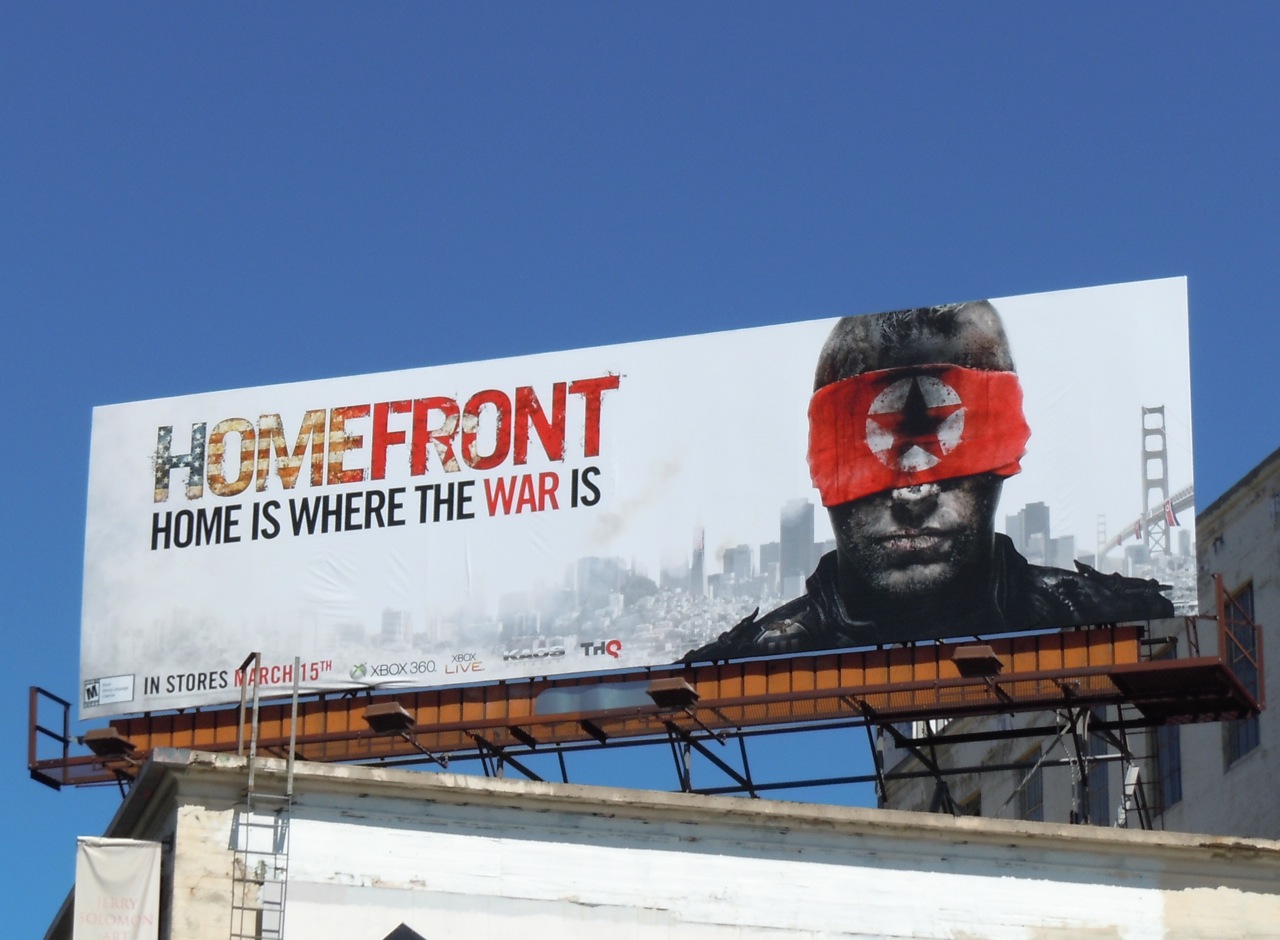
Microsoft and Nintendo know how to market their games. The same can't be said for Sony. Marketing is essential for successful games, and the biggest proof is Homefront. A game that was appallingly bad to most people but sold millions of copies. It benefited by being in a popular genre, but if it wasn't for the marketing, that game would have flopped.

So Microsoft and Nintendo...just keep doing what you're doing. Sony, come over here for a second. What are you doing? Have you realized how bad your commercials have gotten? Of course not, because most of your games have no commercials to critique in the first place. Most games don't need a ton of press because they fill a niche' market that isn't going to succeed simply because of a lot of marketing. But each game will have a specific crowd who will buy it regardless, but marketing can get sales of those unaware of the game. Look at Sly Cooper. That game is beautiful and wouldn't be terribly difficult to market, but nobody knew it came out which is disappointing. If you want to be a software juggernaut, you need to know what you are doing marketing wise. But you don't. Hopefully the new firm you are using will do a better job than the last one.


4. Apps


Long gone are the days where Netflix, Hulu, and Youtube are worth mentioning. They are almost a given. Instead these systems need something special that the other console doesn't have or won't have. Playstation Home can be considered in this topic, but nobody uses it. But no other console had something like it either. An interesting idea with poor implementation. The Wii U has an online community where help can be given or pictures can be drawn and it's super interesting. One of the best things the Wii U has going for it that the other systems should think about. Microsoft had my heart with "1 vs 100", and I absolutely loved it. But they didn't apparently and got rid of it.

So these companies need to find another killer app that will convince gamers that it's too awesome to pass up. Talks of DVR's using your console would be a nice addition, and Microsoft is rumored to have a Siri-like interaction with Kinect this time around. But they can't expect that something as small as Crackle is going to be a bullet point on the back of the box to sell gamers.


5. Online Service


This may be the thing that pushes the next console out in front of the other. I have been vocal about my disgust at Xbox Live and how it's nothing more than a glorified online pass. It would be one thing if they offered free online service and then with a Gold subscription you had the additional perks such as cross game chat and better servers, but instead you are paying simply to have online access. Good online access, but online access. If Sony were to make improvements to their online service and offer the same things Gold has but not charge for it, where does that leave Gold? Perhaps they will do something similar to PS+ where it focuses more on deals and games over things you should already have access to (such as Netflix).

Which is where I'm hoping Sony knocks it out of the park. PS+. Many consider it a rental service, and it partially is. You keep the games you buy, which can be found at discounted prices, but for those that complain about it being a rental service don't often complain about Microsoft's online being a "rental service". What I'm most interested in is the Gaikai acquisition and whether that may play a part in PS+. They have been pushing the idea of an Instant Game Library, but what if they were to expand on that idea and have a Gaikai service stream games if you have PS+. And not just one game a month, but have an actual library of games you can choose from. Yes it would still be a rental service, but it would remove the need to download and install games, more games would be available at any given time, and be one hell of an incentive to have PS+ all year round.


I am truly excited at the next generation of consoles. I'm not expecting a huge leap forward, but there's something special about knowing there's a new console looming on the horizon that could come in and sweep the rug out from under our feet and leave us speechless. But for them to do it, they need to improve on what made this generation of consoles so wonderful.

Thursday, July 12, 2012

The Backwards Compatibility Enigma

The recent talk about the looming next generation of consoles have brought up a topic that has led to heated discussions. It involves the ability to play games one already owns on a new system that is being released. Many have gone on record saying that if the new systems are not capable of playing older games then they will not bother purchasing them. We all know how that will turn out, but for the sake of argument, let's say that's true. I want to quickly go over the backwards compatibility discussion and state that it shouldn't matter whether or not it's available in upcoming systems.


1. If you have the games, keep the system

There's this false assumption that with every iteration of a new console, the big three companies MUST put backwards compatibility in it. I think what most of these gamers forget is that backwards compatibility is a luxury, not a standard for consoles. Think about it. To my knowledge, the PS2 was the first console to really allow gamers to play games from the previous generation. We never had that with the transition to other consoles like the NES to SNES, the Genesis to Saturn, SNES to Gamecube, etc. You could argue that handhelds for the most part has been able to do that, but there's iterations there where that isn't true.

The problem is, most companies hear consumers complain about the price. In their effort to make the systems cheaper, they have to cut out parts of the system. If gamers are concerned about playing old games, shouldn't they have the system for those games already? If not, why get rid of it since there shouldn't be any guarantee the new system can play them? Companies are not held to any obligation to keep old system hardware in a new hardware iteration. This isn't anything new, and has happened for quite some time. The transition from VHS to DVD. Cassette tapes to Cd's. This is just going to be another transition where they held on to the ability to do it for a while, but it's time to phase that option out. Gamers need to get over it and keep the system they want those games on or realize that companies need money to function. One of their ways to capitalize on this idea, is by offering new methods to pay for old games.

2. Collections and Classics

There's been an influx of video games coming both digitally and retail involving the purchasing of old video games from previous generations. For example, you can purchase old Final Fantasy games on PSN from the PS1 Classics part of the store. If you enjoyed games like God of War or Devil May Cry, both have had HD collections of past games on a disc. Gamers who've already played these games see it as a money grab from them, but they forget there's new gamers who have never experienced these games. If anyone should be buying these, it's those gamers. Not the smitten ones.

This is yet another reason why the companies will keep the systems from having backwards compatibility. Why allow them to play old owned games from systems they didn't feel were worth keeping around when they can release them again to be purchased? Final Fantasy 4 is the perfect example of this as it's released on practically everything. It's become such a staple for a console/handheld that it should be mentioned up there with the likes of Ridge Racer and it being a release day game.

It's easy for them to make money off of love for old games. Add in something like achievements or better graphics in parts (not all, even) of the game, and it's likely to still sell. That will be one benefit the companies see in phasing out backwards compatibility and offering these games again for not only cheap, but slightly better versions of the game graphically.


3. Forced to Buy

Customers have this warped sense of logic when it comes to re-release of old games. They believe that if a company removes backwards compatibility and releases the game digitally or on disc, then they MUST purchase the game. Customers apparently have all free-will stripped from their souls when companies do this, because they have no choice but to purchase these games they release.

It's all utter nonsense as the companies aren't forcing gamers to purchase anything. Just because they don't allow the game to be played on a new system and are releasing it in new formats doesn't mean it's the only way to play it now. If you have the game, go play it on the system it was created for. This selfish and ridiculous belief that the game you own is unplayable now and the new release is the only method to experience it is possibly the dumbest thing I've ever heard.

It's one thing to dislike the company for removing something you felt was a bonus, but it's something else entirely for an idiotic notion that it's the only way to play the game now. These gamers need to rethink what they say before they spout these imaginary realities of how consumerism works.


4. It's a Bonus

I have to reiterate this. These console developers are not obligated by any means to incorporate ways to play old games. The consoles are being created to play new experiences with possible means to play older games. If those means are to repurchase the games, then so be it. That is their decision to make. If consumers don't like it, they have other means to play the games. Either by the console the game was created for or emulation. The first option would be preferred, but some games I can't really frown on by using the latter.

If this generation of consoles didn't allow for users to play old games like the original models allowed (which didn't work on 100% of games anyhow), would this still be a problem? Probably. The Internet wasn't really available to everyone in earlier years of gaming, so I'm not sure how loud the outcry is over backwards compatibility between consoles, but I'm sure it was still there. But it's loudest now because it became a reality. But it's something the companies gave their consumers as a bonus and never once did they say they will continue to release consoles with the ability to play older games. We as fans seem to ignore that and expect it. We are greedy, but like to project our greed on companies to make them seem greedier.


5. Fans Do Have a Point...

Companies shot themselves in the foot by showing it's possible. They can't really blame the consumers for wanting something as great as backwards compatibility for new consoles when they showed it's possible to do so. Gamers want a reason to buy a new console and ditch the old one. Why do they want 8 different consoles in their home when they can condense it down to two or three? And why would they want to purchase the same game on different platforms when they already own a copy?

Piracy and emulation is something that a lot of publishers and developers may frown on, but when gamers already own one (or in some cases many) copies of a game, they don't want to purchase it once again. They will go to more extreme measures to play the game especially if they feel cheated by big wigs who don't look at it from their point of view. You take into consideration that some of these games are no longer in print, their copy has stopped working, or any other potential problems, the fallback solution may not rub those looking to sell another copy the right way.

Consumers should be heard. It's their money being spent on games that are changed very little but have the same going price as a brand new game from 15 years ago. If they can purchase a used game off eBay for $5 for the Gamecube, why would they want to then spent $29.99 on the same game for the WiiU especially if there were no changes other than it being put on a different disc format? Fans are not hesitant to verbalize their feelings on the statement, and it's not unreasonable for them to do so either.


As a fan, backwards compatibility is fantastic. It allows me to sell or trade in an old console and buy a new one and reduce the number I have lying around my TV or shoving into the back of my closet. I can spend my money on newer games instead of games I already have in my collection and I also have games to fall back on while newer games are in production. But as someone who also sees the side of the companies, it makes sense for them to take the option off. It lowers the price of the console like most gamers want and gives them the ability to re-release games to not only give the experience to new gamers, but also make money off of anyone who wants to play the game on the new system. However, it is their right to take out backwards compatibility and re-release old games whenever they want. It is their product and they can make it however they choose.

Wednesday, May 23, 2012

Looking Ahead to E3 2012

This time next week will be one of the most exciting moments in video games to happen this year. Between June 5-7, E3 will be taking place in Los Angeles. Like most people, I will not be there. Instead I'll be paying attention to the various news outlets who will feed us numerous videos and articles prominently featuring important (and not so important) news to come from E3. What I wanted to do was pull a reverse-Mr. Caffeine and look ahead to what E3 more than likely has in store.

*Doodly Doodly Doop*


*Doodly Doodly Doop*


  • Sony - After the *ahem* lackluster performance of the Vita, it will be no surprise that most of their press conference will revolve around selling their new handheld system. They will probably show more of the connectivity between the PS3 system and the Vita by showcasing games like Playstation All-Stars Battle Royale (which was recently announced for the Vita as well as PS3) and a game we haven't really seen since last year's E3, Ruin (now titled Warriors Lair). Of course I'm sure they'll have PS3 games to show as well including God of War: Ascension, The Last of Us, Dust 514, and LittleBigPlanet Karting. Wouldn't it be nice to see some Grand Theft Auto V footage here? If there's a conference to have it, I'm going to go with Sony. Those expecting a new system announcement...I'm guessing you'll need to hold your breath.

  • Microsoft - I think Microsoft has sort of fallen under the radar for E3 this year since most people can really only name Halo 4 as something they will show. Alan Wake was rumored to have a sequel underway, so that's a possibility, along with Forza which seems to be a staple almost every year. It would be no surprise to have Kinect shown for a while with more application uses and games, but I think Microsoft will try and go with exclusive content for the main serving of content. Since the Resident Evil demo was a timed exclusive for the 360, I'm guessing there may be some gameplay footage shown at this conference. And of course, don't count them out of holding out exclusivity for Call of Duty: Black Ops 2 as well. New console here? Nope. Hold it just a little longer.

  • Nintendo - Here's that new console you were wanting: the WiiU. Although most people were looking forward to it last year, there wasn't a whole lot to go off of. I would say we can expect to see a price for the system, to see the system itself, and perhaps...a name change. Mario and Pikmin have already been announced for WiiU so those should be seen, and remember that mention of Smash Brothers last year? Maybe a quick video of that will be shown as well. Then some name drops of games coming out for the system and finally the time period it'll be released. Maybe not an exact day, but I would say "Winter 2012". But before all of that, expect a lot of 3DS games, including ones mentioned last year. Luigi's Mansion seems like a no-brainer along with the New Super Mario Bros. 2 game, but I have a feeling there may also be a new Kirby game in the works and some sort of RPG shown at the conference as well.

  • Ubisoft -  What do you honestly think? They have one of the biggest games coming out this year in Assassins Creed 3, so there is no doubt that it will come up for a lengthy amount of time during their press conference. The same with Far Cry 3 which was also shown last year and seems to be another of their core game they want to push. Rayman Legends has recently been announced and the predecessor had time devoted to it last year, so there's a good chance it'll be shown. They also announced Shootmania to be shown at E3, and it seems like something that would find it's way into their conference as well. The crux of their presentation will depend on if they have Mr. Caffeine do the hosting. Despite how terrible he was, I found enjoyment in all of his bombed jokes.

  • EA - I would say EA should have a strong appearance at E3 this year. They have Madden 13 to show and all the various updates to the game that seem to be receiving some praise, Crysis 3 which was recently announced with lots of high-tech bow and arrow action, and Medal of Honor may make an appearance with Warfighter. Also, remember that ending of Mass Effect 3 that caused the Internet to implode with hatred? Well, I expect them to show hints of the "true" ending DLC that they said they would make on the fans behalf. With Katy Perry having some sort of The Sims involvement, maybe they'll even treat everyone to a performance by her as well! Oh yeah, and that new SimCity game that they plan to drop on PC's next year. You remember that game right?


Side notes of confirmations, rumors and speculations:

  • Skyrim DLC: Dawnguard - It's already been announced and...that's about it. If they want to show gameplay of it (or anything else for that matter), there would be no better time than at E3.
  • Epic & Unreal Engine 4 - Epic plans on revealing Unreal Engine 4 and minds will be melted. In so many words, that's what has been promised upon the showing.
  • The Last Guardian - I said it last year, and I'll say it this year. Eventually I'll have to be right...right? But after Fumito Ueda's departure from Sony, it may speed up the process. But I didn't add it to Sony's press conference...just in case.
  • Overkill & Valve - Earlier this week there was talk of a collaboration between the PAYDAY: The Heist and Left 4 Dead crews. While it may seem early, it would sure be nice to see what kind of collaboration is taking place exactly.
  • Kingdom Hearts - Tetsuya Nomura may have put his foot in his mouth by saying Kingdom Hearts is due for another console game. Whether this an HD collection or Kingdom Hearts 3, he may want to do some calisthenics if nothing is mentioned shortly. He said we may know if we finish Dream Drop Distance (releasing in July), but that's soooo far away.
  • Just Cause 3 (and 4?) - Well, since Just Cause 4 already has web domains in the works from recent news, that could mean Just Cause 3 is underway. That could mean an appearance next week at E3. Hopefully someone from Eidos parachutes it in.
  • Half-Life Episode 3 - You can't have a rumors and speculations section without including this game. No real basis for it...but yeah.


Up until doing this, I was kind of hesitant about E3. This year in general has felt somewhat underwhelming in video games other than an occassional few. The constant push-backs in release dates aren't helping at all with Bioshock: Infinite, Aliens: Colonial Marines, Tomb Raider, etc now shipping in 2013 instead of 2012 have caused me to feel a sense of sadness from how big this year was going to be. In truth, this year still has potential for being a pretty amazing year. There's a lot of games lined up that we know about, but may not think about all the time. Then there's the ones that still haven't been announced. Add in the potential of the WiiU being released by the end of this year and 2012 doesn't look half bad. Sometimes it just takes a list to see that.

Friday, May 4, 2012

Why I'm Stumped With Fez

There's a game that's going around, and I'm sure you all know it, named Fez. It's a game that after 4-5  years in the making has received a number of awards and discussion.  It was finally released to the masses after the controversy that was the creator of the game Phil Fish's "Japanese games suck" comment. Despite the long development time and the backlash he received after the comment, the game received very positive reviews.


But here's where I'm stuck...

The concept of the game sounds intriguing. A little 2D man who receives a little Fez hat that allows him to see a different dimension that he uses to solve puzzles to save his world. Many have commented on the music being amazing and the gameplay a little similar to the Paper Mario form of shifting perspectives. There is nothing that I just wrote that would keep me from wanting to play this game. However, the number of reviews on this game do. Below is a few things that I have noticed either said about the game, or not really discussed about it.

  • This game can be a chore and frustrating, and not particularly in a good way. Not until after you see the first "ending" does it really open up to the absolute craziness that makes this game what it is.

  • Most reviewers don't actually say this game is fun in any way shape or form. They comment about what this game turns into and the puzzle lunacy, but nowhere do they make the game sound fun or that they had any fun while playing it.

  • How great it feels to go to the community and see them try to solve puzzles together because nobody seems to be able to do it themselves in game. This moment in gaming where so many people come together to find everything they can in it, and that it may never have been done on this scale before.

Now, I'm confused on why these have been praised where in other games they would be criticized. For example, the going to the community to solve puzzles. Anytime a puzzle game comes out, people always say how important it is to be able to figure them out by yourself. A good puzzle, as most will put it, will leave you scratching your head one minute. But as soon as you figure it out, you feel like a moron for not piecing it together sooner because it was so obvious. That doesn't seem to be the case with Fez. Instead, it is rewarded for being so difficult that you have to not only come to the game with a specific understanding of ideas and previous knowledge, but to go online to find answers that other people have answered.

Not only does this isolate people who may not have an Internet connection (which is something people bring up often when it comes to digital distribution talk), but it brings up the discussion on why sites like Gamefaqs can be scoffed at in one regard of receiving help, but receiving the same amount of help on the game's forum is okay.

My main problem with the puzzles and level of difficulty is the one that had the entire Fez community working in tandem, and that's the very last puzzle. With such a large number of people working on it, one puzzle should not have caused such a problem for them. But not only was it a problem, it was solved by brute force, not any specific methodology.  Nobody who has played Fez can find any sort of reasoning behind the answer to the last problem, nor are they sure it IS the last problem. And while some reviewers were amazed at this and didn't seem to have any issues, it contradicts the very statements they say about games like Portal about the feeling of success they receive when figuring it out. The best part about this puzzle is how the community came together to do it, and that I can understand.


So my question would then be, what about people who come in later? If one of the best things about Fez was the community interaction, what happens to players who play the game at a later date. That community interaction is moot, because the puzzles have already been solved. So one of the best parts about this game is suddenly diminished because being a part of the community to solve Fez's most mind-numbingly frustrating puzzle is gone. The answers have been found, and the game has become nothing more than a Gamefaqs solution away.

But what I'm most concerned about is the actual fun factor. Puzzle games can be fun. Again, Portal is the perfect example of that. So why can't I find many reviewers actually say this game is fun in any term of the word. I can respect the puzzles being hard. Phil Fish sounds like he's on a genius-level I'll never come close to and I am envious of that. The music is apparently amazing and every screenshot I see of the game looks remarkable. I heard the platforming itself is somewhat lacking, and the premise of the game sounds like something I would love. Yet why is it that every person that talks about this game sound like they were clubbed in the back of the head repeatedly while playing it? Being frustrated to the point of looking up answers is not fun. Neither is having to play through a chunk of the game until it picks up interest. Where the actual enjoyment of the game comes from is beyond me, but perhaps it's an elaborate puzzle where I have to decipher the true feelings of the game by picking out every third letter in words with two vowels or more and piecing the letters together backwards.

I'm not sure what to think of Fez. Since I am unable to play the game currently due to no X-Box in the house, all I have to go off of is the reviews and I'm completely baffled by what I'm hearing from them. But at the same time, if the game ever releases to the PS3, I know I'll get it just to see what the hubbub is about. Some people probably think I just don't "get" Fez and I won't until I play it, and that may be true. But I don't "get" how Fez could go against what people want in games but be given the scores that it has when other games would be rated lower due to the same things. So Phil Fish, if you are reading this (doubtful), I hope the game is released on PS3. I would love to be proven wrong and see what this game is about. And if possible, send me a cheat sheet. I've seen the ones people have made, and I don't know if I'm smart enough to figure it out on my own.

Friday, July 1, 2011

REVIEW: Sonic & Sega All-Stars Racing

A few weeks ago, I sat down to this computer and started typing up a review for Brink and LA Noire. I ultimately realized...why would I want to review games that had received enough discussion when instead I could focus on lesser played games that SHOULD receive some sort of recognition. So I sat around playing some games recently, and after a purchase from Gamestop felt I came across one that I could finally write about.


Now, while I feel that those who did review this game seemed to be pretty praiseworthy about it, I think it felt more sideline-esque. Worthy of a mention, but easily overlooked and just briefly stated. After spending quite a few hours this week playing this game, I came to the realization that if you don't have Mario Kart at your disposal, or even if you do, this game could possibly become your favorite cart racer you have played in years.


Sonic & Sega All-Stars Racing features twenty characters and around 30 playable tracks that all revolve around Sega games. While I haven't played a lot of Sega games (and had missed the Dreamcast altogether), a lot of what is in this game didn't seem like it would appeal to me. Half of the characters I didn't know anything about and the most knowledge I had about them is that I heard of the game they were in...but never played it myself. Fortunately for those of us with no experience with Shenmue, Space Channel 5, and ChuChu Rocket!, the majority of the characters in the game (7 of the 20 to be exact) come from the various Sonic games throughout Sega's history. Of course you will see Sonic and Tails, but Shadow the Hedghog makes an appearance along with the much hated Big the Cat.

Once you pick the character you would like to use, there are also 24 tracks to choose from all coming from the same games the characters are in. Here is where I think it starts to overshadow the popular Nintendo cart racing games. The levels in this game are nothing short of beautiful. Bright bold colors with lively music and some creative looks to the level left me in awe. One level in particular involved driving on a sort of "rainbow road" but in the distance is a large head of some characters that I'm unfamiliar with and streams of colors everywhere leading to one trippy experience. I have played many of the Mario Kart games, and none of the levels have really caught my interest the way these levels have.

The controls in this game are remarkably smooth. The movements are tight, drifting is very easy and also a large part of this game, and I have yet to have any issues with placing items. The one drawback I have with the controls are the stiffness and difficulty I have with the character All-Star moves. For example, Tails has the special move of calling down a tornado. Moving Tails and the tornado is quite a frustrating thing. Moving left and right feels almost non-existant while the character itself is automatically propelled forward in the track. As a whole however, the controls are responsive and crisp and easy to pick up and simply play.

All of the characters and tracks that are playable are not available right at the beginning. As the game is played, the player racks up Sega Miles which they can then use to unlock various other characters, tracks, and music to use. While I haven't quite figured out how the Sega Miles calculator works, I would think it safe to assume that it depends on how big the track is, how many laps you do, the difficulty, and what place you finish in. These are quite easy to attain and can be done in the various modes that the game offers from Single Race, Grand Prix, Time Trials, or the missions it offers.

The game modes offer a lot of replayability and a nice mix of ideas that make it push past a simple battle cart game. Like most games, you have the regular single race where you pick the level, the character, how many laps, etc. There are also six different Grand Prix events, each with four different levels to play with basically the same scoring method that Mario Kart has. Time Trials are just what they sound like. You race around tracks trying to reach the quickest time battling not only yourself, but also the staff racer and also the ability race against the ghosts of those on the leaderboard for the game. Finally, the Mission mode has 64 different...well...missions you play from that you need to try to AAA rank in. You can get by getting lower scores, but the AAA is what you should shoot for. While I haven't finished all 64 missions since more unlock as you play them, I have had missions where I roll around on a giant egg as Billy Hatcher, try to get all the chaos emeralds and as many coins I can as Dr. Robotnik, knockout races where a timer ticks down and once it reaches 0 the person in last place is out, and one where targets move on the track and you need to shoot them all with boxing glove items. Very nice addition to an already great game.

Speaking of items, expect a lot of similarities to the italian plumber version. Instead of hitting question mark boxes and running over brightly colored arrows to dash, expect to grab question mark bubbles and run over blue arrows to speed up. Missiles have replaced red turtle shells while green turtle shells have been replaced with green boxing gloves. Each character also comes with a special maneuver if they are racing rather badly, but fortunately the rubber-band gameplay is not as bad as it's Nintendo counterpart and while I'm in first, I've never been threatened by a character who went into their "All-Star" attack. Throw in some other items like a confusion star that turns the world upside down for a character or a horn that blasts characters too close to you, and despite the similarities, it comes out with a good number of likeable items.

Now, I have mentioned Mario Kart several times in this review and normally I'm not a big fan of reviewers throwing in other games to describe the one they are trying to review. However, once you play this game, you'll notice why I used it. This game does more than simple nods to Mario Kart, it flat out goes full Night at the Roxbury head bob for this game. Make no mistake, Sega made this game to try and capture the Mario Kart audience that wasn't quite being fulfilled enough on the Wii and DS, and for sure wasn't being satisfied on the Xbox or Playstation. And while games that try to cash in on other game successes usually come off pretty poor, I hope Sega comes out with more. This was an immensely satisfying game and the best cart racer I've played since the original Mario Kart.

Thursday, April 28, 2011

Why Nintendo SHOULD have the edge in the console wars

This generation of console sales was pretty one sided with Nintendo dominating in the sales charts. They successfully pulled in the casual consumer with their motion controller, despite weak software sales due to lack of third party support. With Project Cafe on the horizon, that should all change. And if it does, Nintendo is truly a force to be reckoned with...IF...they learn from their mistakes and take advantage of everything they have.

1. Strong Back Catalogue:

Between the three companies, only Nintendo and Sony have the right to say they can pull out games from a vault and sell it to users. Sony is somewhat doing this well with their PS1 classics on the PSN store, the problem being that most of the games people want are being released in Japan, but not so much everywhere else. That seems to changing a bit with recent releases of Parasite Eve, Suikoden, and Chrono Trigger being an upcoming release.

Nintendo on the other hand have the Virtual Console. With almost 30 years of games under their belt, the VC should be packed full of games that nostalgia has us banging on the door for. The problem Nintendo faces is basically ignoring any and all online support they could have had for the Wii and forgetting to market these games that people could want. Nostalgia is a great way to bring in sales, especially if that nostalgia is relatively cheap to put on the system, easy to get to and a cheap enough price that gamers can't shrug off. Nintendo will need to use their back catalogue to the best of their ability to bring in side sales but they need to also market the products as well as Xbox Live instead of what they did with the Wii.


2. The Best First Party and Exclusive Support


Remember that nostalgia thing I just talked about? It's an even bigger component here. Because on no other console will you see Mario, Zelda, Metroid, Donkey Kong, Kirby, or Pokemon. People grew up with these games. And whether Nintendo decides to do another successful game to capitalize on that nostalgia in the same vein that Super Mario Brothers Wii did or do a fresh new game like Donkey Kong Country Returns; it's these games and characters that intrigue players. If Project Cafe does indeed bring back the hardcore gamer, these will be one reason why. None of these games require a deep knowledge of each respective world. It's jump in and play. Which is more than most first party/exclusive games can say on the 360 or PS3. And like I said, I don't see any of these franchises jumping ship to another console. But Nintendo has featured Sonic in Super Smash Brothers and the same with Solid Snake. Notice however that some games that were at one time exclusive, such as Metal Gear Solid and Mass Effect, are now going multi-console. So again, to reiterate my point, Nintendo has first party exclusive games that will NOT be going to a different console. And if Project Cafe puts up the sales numbers that the Wii did, it will be even more incentive for various developers to jump onto the Nintendo console. Whether it big time companies like Activision or the low-on-the-totem-pole Indie developers, they all want money. And there is more chance for money where there is a bigger install base with people who will buy their product. Which again, Nintendo will have if they bring back the hardcore gamers.


3. Learn from Microsoft and Sony

Virtual Console. DSIware. Wiiware. Friend Code. If anyone knows what these are, they also know these are complete failures on Nintendo's part. Despite the Wii having the most sales, it's not motion controlling that has had the biggest impact on gaming this generation, it's the online component. Nintendo can not flounder in this department again with the upcoming console. They don't even need to do anything revolutionary, just get an online system going that WORKS. They need to know how to market games correctly that they are trying to sell online, they need to find an easier way to get some sort of online gaming network going, and they definitely need to keep the music they have for their various shops. Say what you want about their virtual stores, but their music beats out Sony and Microsoft's hands down.


4. Do not worry about the console specs

So rumor is that Project Cafe has more power than the Xbox and PS3. Fine. But as the 360 and PS3 have shown, specs aren't everything. Although the PS3 should be producing better looking games...it really doesn't. There is only a handful of games that I could use as examples for the PS3 being above the 360 in terms of power. So if Nintendo has the "better" console, fantastic. But in the long run it doesn't mean much, especially if you take a look at their track record. Nintendo is not about up-to-date tech. They use older tech for cheaper cost. Which is both a good thing and a bad thing. For the good, it makes for cheaper consoles. I'm sure everyone remembers the "new" tech that Sony released that was the PS3. $700 I believe? Too much for an average gamer. It wouldn't be until years later that their price dropped enough for the consumer base to rise to be a contender for the 360. So even if Microsoft and Sony released a console in the next few years, it will probably be more expensive than the Nintendo console's release price, and definitely more expensive than the Nintendo console will be upon the new 360/PS3 console release. The bad would simply be an outdated system the minute the new Xbox or Playstation console is released. So with this almost Dreamcast approach to release a console between generations, Nintendo may actually be making a smart business decision with the release of this console.

5. Backwards Compatibility

More rumors about Project Cafe claims it will also be able to play Wii games and possibly Gamecube games. If this is true, this is something that should also be advertised. Despite the hardcore gamers Snively Whiplash way of thinking (a foolproof plan it is not) that they are the only consumer base Nintendo should worry about, the truth of the matter is that the casual base is quite important still. If they include backwards compatibility, they have a chance of bringing back casual gamers on top of hardcore ones bumping up their sales and keeping the casuals away from Sony and Microsoft. So I would expect the controllers that were purchased for the Wii to still work for some games which would also avoid the alienation of Wii owners.

Remember, Sony and Microsoft both received a bit of backlash when their compatibility was removed from consoles. Microsoft technically did not remove it I believe, but it only allows certain first gen Xbox games to be played. Sony did remove it fully in later PS3 hardware. If Nintendo keeps backwards compatibility, still releases games for the Wii, their Wii software sales will probably increase as well too. Especially if they release older games such as Mario Galaxy or Super Smash Bros Wii that the detracted hardcore gamers never got to play in the first place. So while the Wii may eventually die off, Nintendo could still squeeze out sales from the Wii software and even get more sales for it post-Wii than they did present-Wii.

6. Innovation


Nintendo has done quite a bit for gaming. There has been negative response such as the Virtual Boy and there has been lukewarm response such as motion controls, and there has been positive response like the Game Boy. Say what you will about some Nintendo products, but they can normally put SOMETHING different out there. Some are thinking that the controller may be this type of innovation with it's touch screen and what that could mean for potential games, and some are thinking they could take a step beyond what failed with the Gamecube and find a way to link games between the handheld systems and the console itself. With next to nothing known about the new console, these are the only two real possibilities. Remember, 3D was originally thought of on the Gamecube as well, and the same with motion gaming. Both fell through and showed up in later forms. The link between the GBA (I believe it was) and the Gamecube was also something that never quite worked out. However, with the number of handheld love growing since the release of the DS's all the way to the 3DS, there's a chance that these handhelds may not be required, but can give players more incentive to own both the handheld and console for exclusive gameplay.


7. Third party and indie developers

And the straw that broke the camels back for Nintendo. The only thing that worked for the Wii were first party games or acutal party games. The Wii was not the console for third party developers and very weak for independent devs as well. Any ports from consoles were done poorly and it got to the point where no developers other than first party were worth supporting on the Wii. Project Cafe is already said to be correcting that with Rockstar already being mentioned as a developer for the console. So with Nintendo being the company with the best selling first party games, the third party games now appearing on the new console, and the other consoles finding themselves with fewer and fewer exclusives, Nintendo may be riding high with games upon the release of Project Cafe.


Depending on who you ask, the console wars boil down to two things. The fans will say that the winner of the console wars is the one that gets played the most. The companies themselves would say the sales are what matter the most. If Nintendo takes the proper steps, they can win both sides of the argument and make the next generation of consoles for Sony and Microsoft to be embarrassments. I don't think this will be the case since Nintendo tends to hold back leaving room for the other companies to improve on what Nintendo should do. The possibility is there, however, and if Nintendo wants to put an end to these console wars they need to look past the boardroom and at the fans. We know what we want.